

SOURCE-LED ANALYSES
Strider: when the scenery becomes a route
I approach Strider as a relationship between an acrobatic body and the surfaces around it. Height changes the meaning of a path, not just the view.
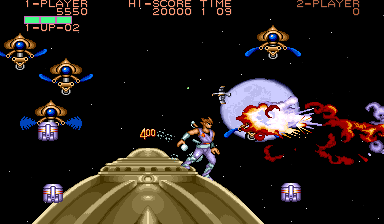
Game profile
- Catalog year
- 1989
- Manufacturer
- Capcom
- Genre
- Platform / Fighter Scrolling
- Metadata players
- 2
- Set ID
- strider
A wall can be an invitation
Capcom's arcade manual foregrounds climbing and acrobatics. That description changes how I read the scenery: a steep surface need not be the end of movement. A useful scene gives enough visual information to distinguish a possible route from background decoration. The player is then reading an environment through the abilities of the character.
An arc suggests a distance
The sword's visible sweep creates a different image of attack from a bullet travelling across the screen. I read it as an invitation to judge nearby space. The important visual relationship is between the character, the approaching threat and the room left to move. This is a reading of composition, not a claim that an animation reveals the precise collision boundary.
Height reorganises attention
Moving above a threat can change which information deserves attention next. A scene that asks the eye to travel vertically resists the habit of watching only the right-hand edge. I would follow the next landing surface first, then the danger near it. That order makes a spectacular jump into a legible sequence of decisions.
Keep spectacle readable
Large movement and dramatic scenery can share the screen without every element demanding the same attention. I value a clear silhouette and a visible destination more than sheer detail. On a small display, decoration that merges with a usable surface weakens the route. Strider offers a useful question for any action interface: can the player recognise a possibility before committing to it?
Three questions I ask while looking
- Which surface appears usable rather than decorative?
- What is visible at the next landing point?
- Does the attack animation clarify distance without hiding the route?
Sources and scope
Capcom's original arcade manual supports the emphasis on climbing and acrobatics. The analysis of silhouettes, attack distance and attention is my interpretation; it does not specify collision boxes or reproduce the different NES game.