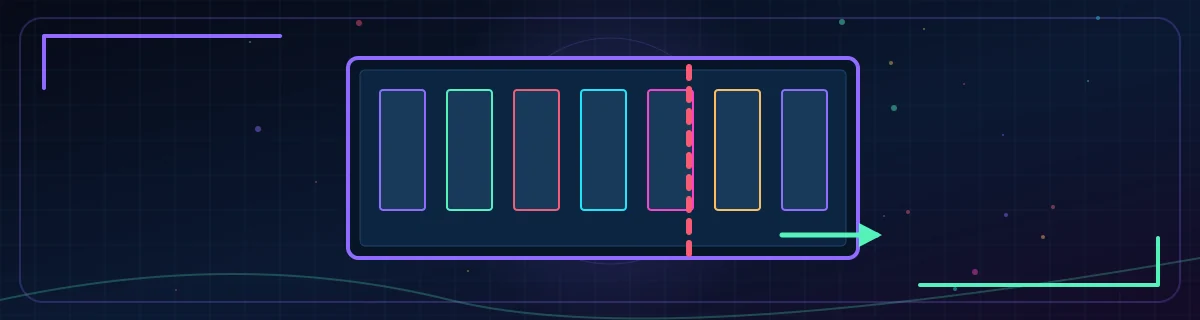
Original illustrative cover created for this article, not a screenshot of an actual game.
The camera reveals a budget of space
A character near the forward edge has less visible room ahead than one near the center. I ask how that framing fits the pace of movement. More background is not always better, but an approaching hazard needs enough visible context to be interpreted before contact.
Off-screen does not mean irrelevant
A sound, a shadow or an entering object may announce something outside the current frame. I look for consistent rules around those entrances. An unseen event can create tension; an unexplained consequence can create confusion. The difference lies in what information is available, rather than in visibility alone.
Adaptation can shift the boundary
Cropping, stretching or covering part of the scene with controls changes the useful field of view. A browser presentation can therefore alter the reading task even when the game logic remains unchanged. I would compare the usable area before calling an adaptation equivalent, and keep that comparison separate from a performance test.
Three questions I ask while looking
How much useful space is visible ahead?
How are off-screen events announced?
Do overlays remove part of the decision area?
This is a design interpretation, not a device measurement or evidence of developer intent.