

SHORT DESIGN NOTE
Rampage
A short design note from the previous edition; not a new play-test report.
The historical team credits and all external sources of this short note were not reverified in this revision. Do not read interpretation as a measured play test.
Catalog data — identifies the version
- Catalog year
- 1986
- Manufacturer
- Bally Midway
- Genre
- Platform / Fighter
- Metadata players
- 3
- Set ID
- rampage
- Cached status
- GOOD
These fields come from the existing metadata cache dated 30 July 2026. Player count does not promise simultaneous online play, and emulation status is not a test result from this device.
Compare in the catalog →Playing from the Monster's Side
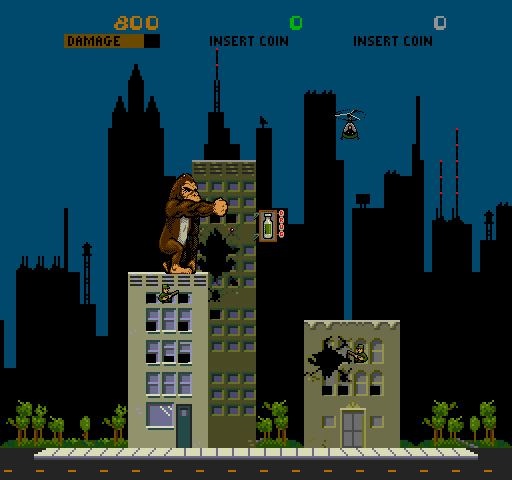
Designed by Brian Colin and Jeff Nauman, Rampage let players become the disaster rather than escape it in 1986. George, Lizzie, and Ralph climb skyscrapers, punch windows, and dismantle cities one stage at a time. By reversing the viewpoint of giant-monster cinema, the game turns destruction into a shared comic performance.
The Building as a Health Bar
A building's damage is visible through cracks, missing floors, and instability. The player climbs its sides, reaches into windows for food, and tries to jump clear before collapse. Soldiers, helicopters, and electrified signs interrupt the rhythm of destruction, constantly shifting priority between attack and survival.
Controlled Chaos for Three Players
Three monsters can cooperate on the same screen but may also strike one another, steal food, or knock a partner from a collapsing building. The game never separates team and versus modes; players negotiate the relationship in real time. Laughter, physical proximity, and sudden betrayal around the cabinet are intended systemic outcomes.
A City Tour Built from Repetition
The central action remains stable across the long tour, with variety emerging from building arrangement, military response, and player behavior. I read Rampage as a game built less on content volume than on a strong role fantasy and social physics. Simple destruction becomes a memorable shared story in the right context.
Sources and scope
- The Strong Museum — Rampage
A source link retained from the previous edition. A general company page does not verify a specific historical claim.
- Arcade Database — Rampage
A source link retained from the previous edition. A general company page does not verify a specific historical claim.
- Arcade Database — rampage
Metadata provenance link; cached fields were not freshly recrawled from that site in this revision.
Read alongside
This is neither a distribution license nor a play-test report. Public game access requires separate verification of the applicable rights.