

SHORT DESIGN NOTE
Samurai Shodown II / Shin Samurai Spirits - Haohmaru Jigokuhen
Distance and defence in Samurai Shodown II: features verified against SNK records, with annotated decision diagrams.
Updated ·
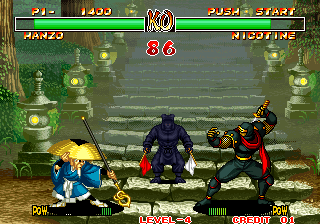
Catalog data — identifies the version
- Catalog year
- 1994
- Manufacturer
- SNK
- Genre
- Fighter / Versus
- Metadata players
- 2
- Set ID
- samsho2
- Cached status
- GOOD
These fields come from the existing metadata cache dated 30 July 2026. Player count does not promise simultaneous online play, and emulation status is not a test result from this device.
Compare in the catalog →What the source establishes
SNK dates the original game to 1994. Its collection entry lists forward/back rolls, a low-attack dodge and weapon-breaking attacks. Those facts underpin the reading below. I keep a later reissue date separate from the original arcade year, and do not treat these documents as device benchmarks or tests of a particular character’s combos.
Distance is a decision before a hit
In the range diagram, space separates the player on the left from the opponent on the right. If an attack area cannot reach the opponent, pressing a button does not replace the decision to approach. I ask two questions separately: where to stand and when to move. The drawn weapon lengths make that distinction visible. They are not actual hitboxes or measured reach values for the game’s characters.
Defence also chooses a position
The second diagram reads the same encounter through three possible intentions: approach, hold distance and retreat. Advancing aims to gain reach but can also enter the opponent’s reach. Retreating aims to create space but may reduce the room available behind the player. This is not a list of universally correct moves. It is my interpretation of why the defensive options documented by SNK can change positional decisions as well as the command list.
Why weapon breaking raises another question
A weapon-breaking attack suggests that watching the life bar alone may be insufficient. When an opponent’s available tool changes, I need to reconsider the distance I want to keep. The official description includes the Rage system; I make no numerical damage or gauge-fill claims here. What interests me in a duel is the room that each choice leaves for the next decision.
Reading range as a threshold
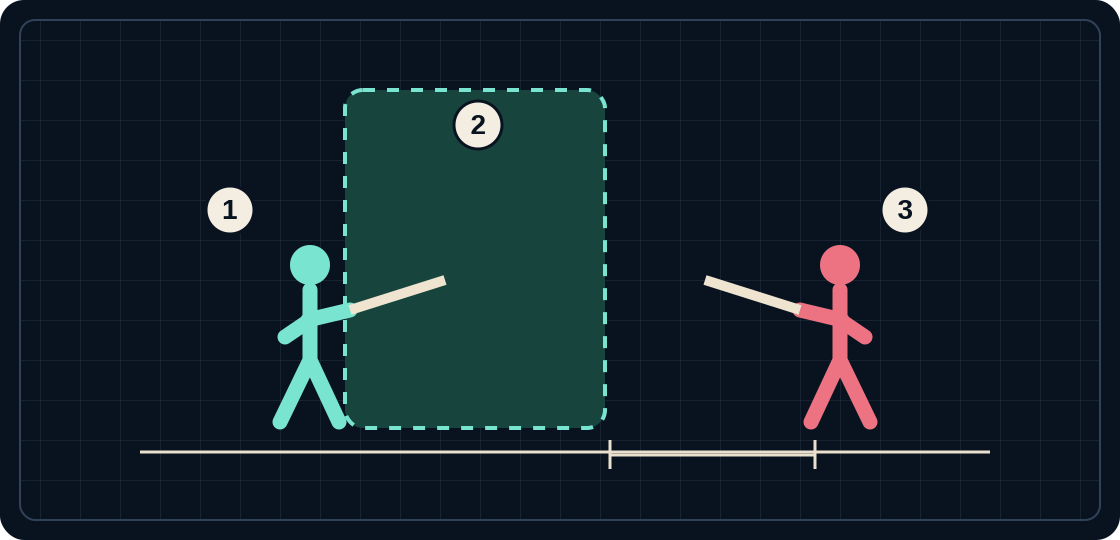
- 1Player
- 2Example attack area, not an actual hitbox
- 3Opponent outside the example area
Three movement intentions
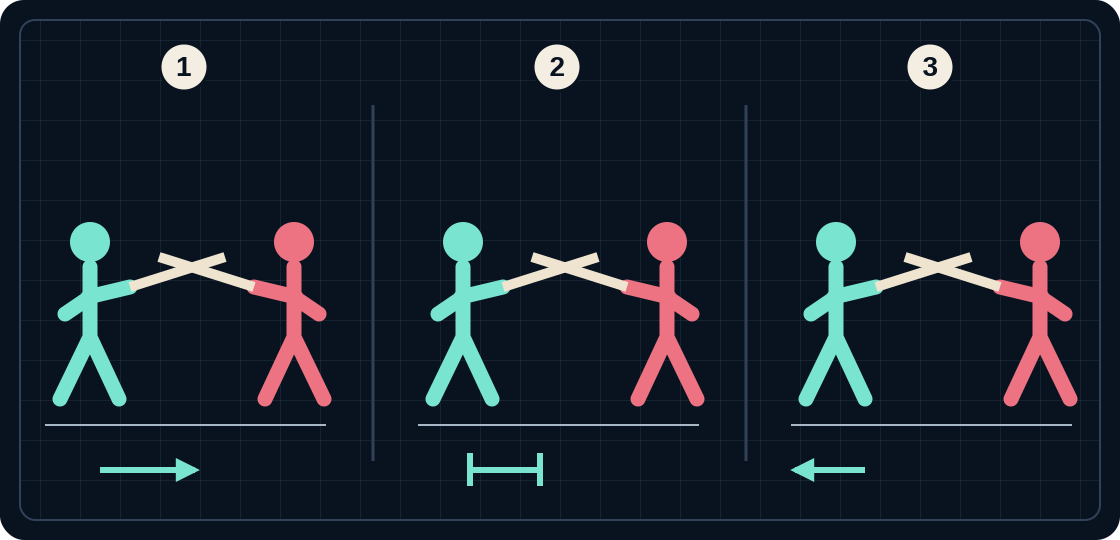
- 1Intention to approach
- 2Intention to hold distance
- 3Intention to retreat
Verified claims and sources
- SNK · NEOGEO Collection
- Claim
- 1994; rolls, low-attack dodge and weapon-breaking attacks.
- Evidence
- Samurai Shodown II entry
- SNK · ACA NEOGEO
- Claim
- Rage system; original year and reissue date are separate fields.
- Evidence
- Samurai Shodown II game entry
SNK’s direct records were checked for the date and listed systems. The drawings and distance readings are editorial interpretations, not designer credits, frame data or claims of a recorded play session.
Numbered drawings are Cinarverse explanatory diagrams, not game screenshots or recorded play tests.
Read alongside
This is neither a distribution license nor a play-test report. Public game access requires separate verification of the applicable rights.