

SHORT DESIGN NOTE
Mortal Kombat II
A short design note from the previous edition; not a new play-test report.
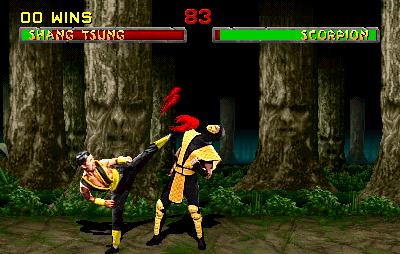
The historical team credits and all external sources of this short note were not reverified in this revision. Do not read interpretation as a measured play test.
Catalog data — identifies the version
- Catalog year
- 1993
- Manufacturer
- Midway
- Genre
- Fighter / Versus
- Metadata players
- 2
- Set ID
- mk2
- Cached status
- GOOD
These fields come from the existing metadata cache dated 30 July 2026. Player count does not promise simultaneous online play, and emulation status is not a test result from this device.
Compare in the catalog →A Sequel That Opens Outworld
Mortal Kombat II moved the tournament from Shang Tsung's island to Outworld in 1993 and visibly expanded the series' universe. A larger roster, new stages, and relationships among fighters transformed the first game's eerie mood into a more colorful fantasy world. Narrative expansion was tied directly to playable variety.
Faster and More Flexible Combat
Shared basic attacks remain, but every fighter gains more special moves and finishing options. Crouching punches, uppercuts, and aerial attacks strengthen the vertical flow of a round. Combos are not yet formalized as they would be later, but speed and cancel windows make aggressive play more expressive.
Content Expanded by Secrets
Multiple Fatalities, Friendships, and Babalities encouraged players to exchange knowledge around the cabinet. Secret opponents and stage finishes turned rumor into part of the playtime before widespread internet access. Because the full feature set was never explained in a menu, learning became a discovery process shared by the community.
How a Sequel Intensifies
Mortal Kombat II intensifies every layer without abandoning the original core: more characters, faster encounters, stronger art direction, and more hidden outcomes. I examine how a sequel can expand not just quantity but also tone and the circulation of knowledge among players.
Sources and scope
- Mortal Kombat — Official franchise
A source link retained from the previous edition. A general company page does not verify a specific historical claim.
- Arcade Database — MK II record
A source link retained from the previous edition. A general company page does not verify a specific historical claim.
- Arcade Database — mk2
Metadata provenance link; cached fields were not freshly recrawled from that site in this revision.
Read alongside
This is neither a distribution license nor a play-test report. Public game access requires separate verification of the applicable rights.